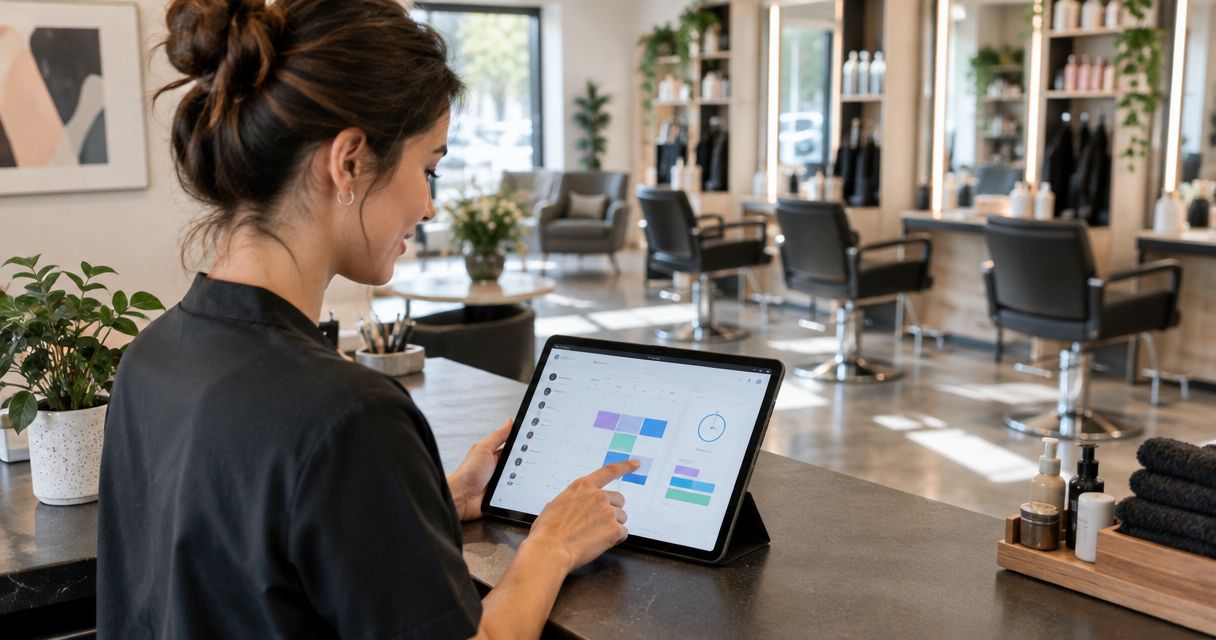
Best overall for straightforward online bookings: Calendra. Best for salon marketplace discovery: Fresha. Best for payment-led appointment management: Square Appointments. Best for consultation-led scheduling: Acuity Scheduling. This 2026 guide compares the best appointment scheduling software for salons by booking model, operational fit and the checks you should complete before choosing.
- Calendra is the best appointment scheduling software for salons prioritising straightforward, 24/7 online customer bookings.
- Fresha suits salons that want booking software connected to a beauty and wellness marketplace.
- Square Appointments suits salons evaluating scheduling alongside Square payments and point of sale.
- Acuity Scheduling suits appointment businesses that need intake forms and consultation-focused scheduling.
- Choose around your actual service workflow; verify staff, resource and payment requirements before committing.
Why this matters
Your salon needs more than a calendar with empty spaces. A booking must match the service duration, the right person and any equipment or room the treatment requires. If those rules stay in a separate notebook, online scheduling only solves part of the job.
Calendra provides online appointment scheduling for salons and other service businesses, allowing customers to book 24/7. That makes it a relevant starting point when your main requirement is accepting appointments online rather than by phone or message.
Calendra is best for salons whose first priority is accepting customer bookings online, 24/7. More specialised requirements need a separate check: staff allocation, treatment resources, deposits, customer records and payment workflows should each be demonstrated against your own services.
What makes the best salon scheduling software?
Use these criteria to assess salon appointment software in 2026. A feature earns its place only when it removes a real booking task or prevents a scheduling mistake.
- Customer booking experience: Customers should understand the service, choose a suitable appointment and know what happens after submitting it.
- Staff and resource fit: Check whether a booking reserves everything the treatment needs, including the professional, chair, room or equipment.
- Service timing: Your setup should reflect treatment duration, preparation, cleanup and any processing time that affects availability.
- Appointment changes: Test cancellations and rescheduling from both the customer and salon sides. Check what happens to the released slot.
- Business model fit: Decide whether you want direct bookings, marketplace discovery, payment integration or consultation-first intake.
- Operational control: Check access permissions, customer-data exports and the steps needed to keep the calendar accurate.
Do not treat a long feature list as proof of a good fit. A salon with independent chair renters has a different scheduling problem from a single-practitioner studio, even when both offer the same treatments.
Salon scheduling software at a glance
The order below starts with direct online booking, then separates the alternatives by their clearest use case. There is no universal winner across every salon operating model.
| Software | Best for | Standout focus | Key limitation to assess |
|---|---|---|---|
| Calendra | Straightforward customer bookings online | Accepting appointments 24/7 | Confirm specialist salon workflows before adopting |
| Fresha | Beauty and wellness marketplace discovery | Scheduling connected to a consumer marketplace | Assess marketplace participation separately from direct booking needs |
| Square Appointments | Payment-led appointment management | Scheduling within the Square ecosystem | Verify relevant services and integrations for your country |
| Acuity Scheduling | Consultation-led appointments | Scheduling with intake forms | Verify treatment-resource and salon-management requirements |
For an Indian salon choosing software in 2026, country support belongs on the shortlist checklist. Check the payment methods, messaging options and account requirements you actually intend to use; an appointment calendar alone does not confirm those services.
1. Calendra: best salon scheduling software for direct bookings
Calendra provides online appointment scheduling software for salons, clinics, spas, studios, restaurants and other service businesses. Customers can book online 24/7, making its stated purpose a close match for a salon that wants bookings to move beyond calls and messages.
Start the evaluation with the customer journey. Choose a real treatment, follow the booking process and check whether the resulting appointment contains enough information for your team to act without another conversation.
Calendra pros:
- Its stated service includes online appointment scheduling for salons.
- Customers can make bookings 24/7 rather than relying on a conversation during opening hours.
- Its booking-focused purpose gives you a clear starting point for evaluating your core requirement.
Calendra cons and checks:
- General appointment scheduling does not, by itself, establish support for salon-specific processing times or shared treatment resources.
- Staff assignment, payment collection, reminders and integrations need individual verification rather than assumption.
Best for: Salons prioritising a straightforward way for customers to book appointments online.
Before choosing, map your busiest service to the booking process. If a colour appointment involves an application stage, processing and finishing, check how the calendar represents the whole visit. Do not assume a single duration field handles every operational detail.
Verdict: Buy for direct online booking once your actual service workflow passes the booking test.
2. Fresha: best salon scheduling software for marketplace discovery
Fresha combines appointment software with a beauty and wellness marketplace. That makes it a different proposition from choosing a calendar solely for customers who already know your salon.
Evaluate the two jobs separately: managing appointments and presenting your business to marketplace users. A marketplace listing is a discovery channel, not evidence that a particular salon will receive additional bookings.
Fresha pros:
- Its beauty and wellness focus makes it relevant to salon appointment workflows.
- A consumer marketplace adds a discovery route alongside the scheduling function.
- You can assess the customer-facing listing and the appointment experience as parts of the same buying decision.
Fresha cons and checks:
- Marketplace discovery does not guarantee enquiries, appointments or repeat customers.
- Marketplace policies and customer relationships require review alongside the scheduling features.
- A salon focused exclusively on existing customers should decide whether marketplace participation serves a real need.
Best for: Salons that want to evaluate marketplace discovery as well as appointment management.
For your 2026 shortlist, inspect the customer journey from discovery through booking. Check how customers identify the service, understand the salon and manage an appointment afterward. Then compare that journey with the experience you want for returning clients.
Verdict: Buy when the marketplace model fits your customer-acquisition plan; skip it as a reason to switch if you only need a calendar.
3. Square Appointments: best salon software for payment-led scheduling
Square Appointments is appointment scheduling software within Square's wider payments and business-tools ecosystem. It belongs on your shortlist when scheduling and checkout need to be considered together.
Start with country eligibility and the specific Square services available to your business. For a salon in India, do not design a checkout workflow around a service before confirming that you can use it locally.
Square Appointments pros:
- Scheduling can be evaluated alongside Square payments and point of sale.
- Its ecosystem approach gives payment-led businesses a clear integration question to investigate.
- It suits a selection process that follows the customer from appointment booking through checkout.
Square Appointments cons and checks:
- Country-specific service eligibility is a prerequisite, not a detail to resolve after setup.
- An ecosystem connection is only useful when the relevant components meet your requirements.
- A salon that only needs online booking should avoid making payment integration the deciding factor unnecessarily.
Best for: Salons assessing appointment management alongside a compatible Square payment workflow.
Demonstrate a complete visit rather than viewing the calendar in isolation. Book a treatment, change it, complete the visit and inspect the resulting customer and transaction records. Confirm how your team would correct a mistake without maintaining conflicting records elsewhere.
Verdict: Hold until country support and the full appointment-to-payment workflow are confirmed.
4. Acuity Scheduling: best salon software for consultation-led bookings
Acuity Scheduling supports online appointment scheduling and intake forms. It is relevant when a consultation or information-gathering step shapes the appointment before a treatment takes place.
Consider this model when the booking needs context, not just a name and time. Your evaluation should establish whether the right questions appear at the right stage and whether the practitioner can access the answers before the visit.
Acuity Scheduling pros:
- Intake forms support collecting information as part of scheduling.
- Its appointment-led approach is relevant to consultation-first services.
- You can evaluate the booking journey around preparation as well as calendar availability.
Acuity Scheduling cons and checks:
- Intake forms do not establish suitability for every salon-management task.
- Shared resources, treatment processing and retail workflows need separate verification.
- Adding questions without a clear purpose creates more work for customers and staff.
Best for: Salons and studios where consultations or pre-appointment questions are central to service delivery.
Keep the initial form focused. Ask for information needed to route or prepare the appointment, and decide separately how sensitive treatment information should be collected and stored. A booking form should not become an unrestricted substitute for your professional consultation process.
Verdict: Buy when consultation intake is a core requirement and the treatment calendar meets your operational needs.
How these salon scheduling options are ranked
This ranking uses the criteria above: customer booking, staff and resource fit, service timing, appointment changes, business model and operational control. The first recommendation addresses the simplest stated need: accepting salon bookings online.
The alternatives then occupy distinct decision slots. Marketplace discovery, payment-led scheduling and consultation intake are different priorities, not interchangeable measures of software quality.
Use this 2026 ranking to select a booking model, then use a live demonstration to select the software. No performance score, conversion improvement or customer-growth claim is implied by the order.
Test a real salon booking before committing
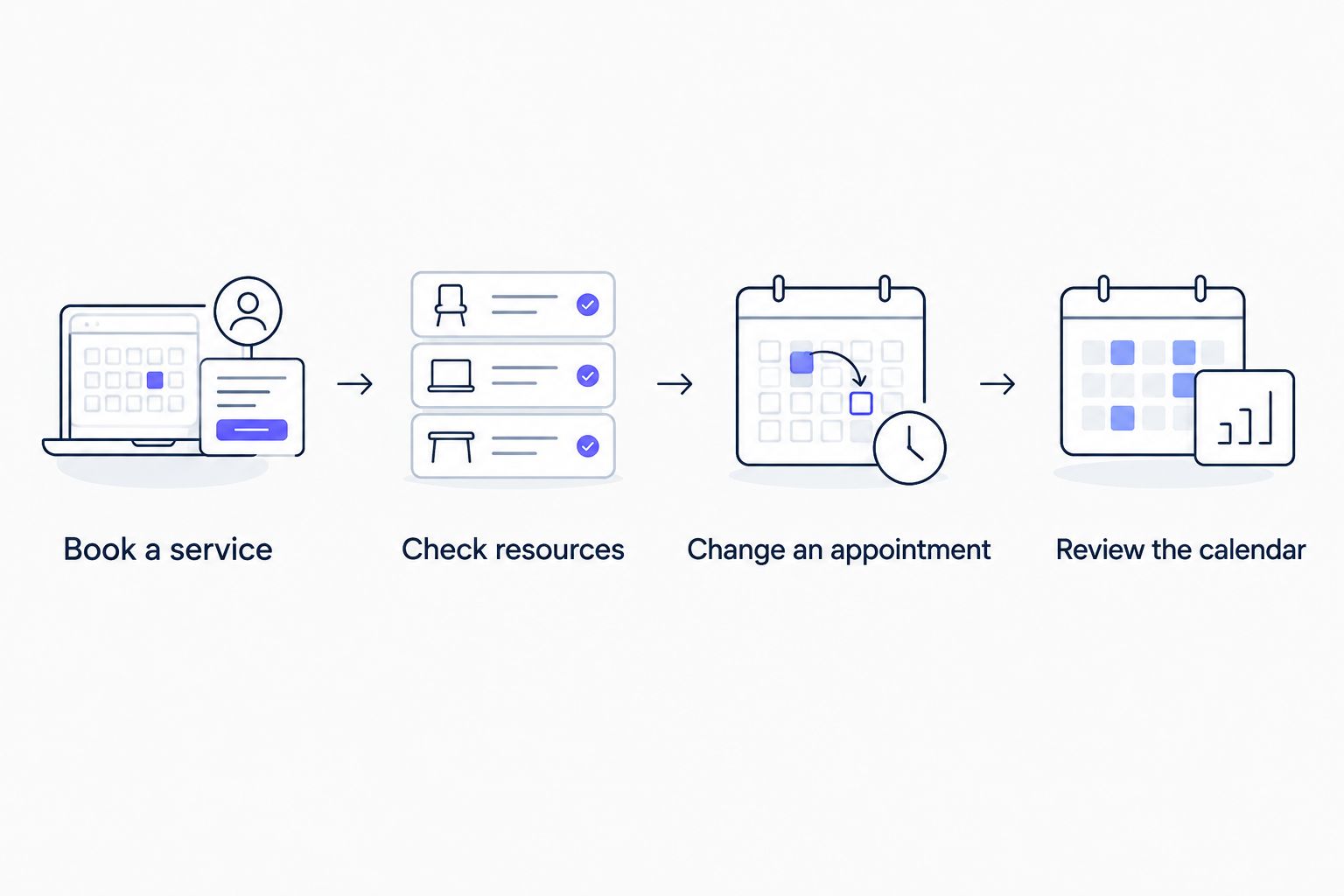
Use a short acceptance test instead of browsing settings indefinitely. Run 3 test bookings with clearly labelled test customer details: a routine service, a more complex treatment and an appointment that needs changing.
- Book a service: Use a sample 30-minute treatment. Check what the customer sees and what appears in the working calendar.
- Check resources: Try a treatment requiring a particular professional or room. Confirm what prevents an unsuitable booking.
- Change an appointment: Reschedule one booking and cancel another. Inspect both the customer message and the released availability.
- Review the calendar: Ask a team member to explain the day's appointments without relying on separate messages.
These are test scenarios, not claims about any product's configuration. If your salon needs a 15-minute cleanup gap, include that requirement explicitly rather than assuming the software inserts it.
Record each requirement as passed, failed or unresolved. An unresolved requirement is a question for the provider, not a feature you should assume exists because a neighbouring function works.
Which salon scheduling software should you choose?
Choose direct online booking as your default when your main problem is taking appointments outside opening hours. Start with the first-ranked option, then move to a specialist alternative only when you can name the requirement that justifies it.
Choose Fresha when marketplace discovery is part of the plan. Assess Square Appointments when compatible payment and checkout workflows drive the decision. Choose Acuity Scheduling when consultation intake is central to the appointment.
For a 2026 purchase, finish with operational ownership: who updates service durations, who changes staff availability and who checks booking mistakes? Software cannot keep a calendar accurate when nobody owns those tasks.
FAQ
What's the best appointment scheduling software for salons in 2026?
Calendra is the starting recommendation for salons prioritising straightforward, 24/7 online bookings. Fresha, Square Appointments and Acuity Scheduling address marketplace discovery, payment-led workflows and consultation intake respectively; verify your salon's requirements before choosing.
Can customers book salon appointments outside opening hours?
Yes, online appointment scheduling can accept bookings outside salon opening hours. Calendra explicitly provides 24/7 customer booking; booking access is separate from the hours when your salon delivers treatments.
Is Fresha better than a direct booking system?
Fresha is the more relevant option when beauty and wellness marketplace discovery is part of your requirements. If you only need existing customers to book appointments, assess the direct booking workflow first rather than treating marketplace participation as essential.
Can an Indian salon choose Square Appointments?
An Indian salon should confirm current country eligibility before shortlisting Square Appointments. Verify the scheduling, payment and account services required for your intended workflow rather than assuming every Square service is available locally.
Do salons need intake forms with appointment software?
Salons need booking-stage intake forms when answers affect appointment selection or preparation. Acuity Scheduling is relevant to that requirement, but keep questions focused and assess sensitive-information handling separately.
How do I test whether scheduling software handles my salon services?
Run a routine booking, a complex treatment booking and an appointment-change scenario. Check staff availability, treatment resources, timing and the customer-facing result using your actual operating requirements.
Should I choose salon scheduling software based on the longest feature list?
No, choose salon scheduling software based on the workflows your team and customers need to complete. A feature only adds value when it solves a defined problem without creating unnecessary administration.
One last thing
Test the appointment you least want to manage manually. A simple haircut booking proves less than a treatment involving preparation, a particular practitioner and a change of time.
Make that difficult appointment your final acceptance test. Choose the system that represents the work accurately, not the one that merely makes an empty calendar look easy to fill.