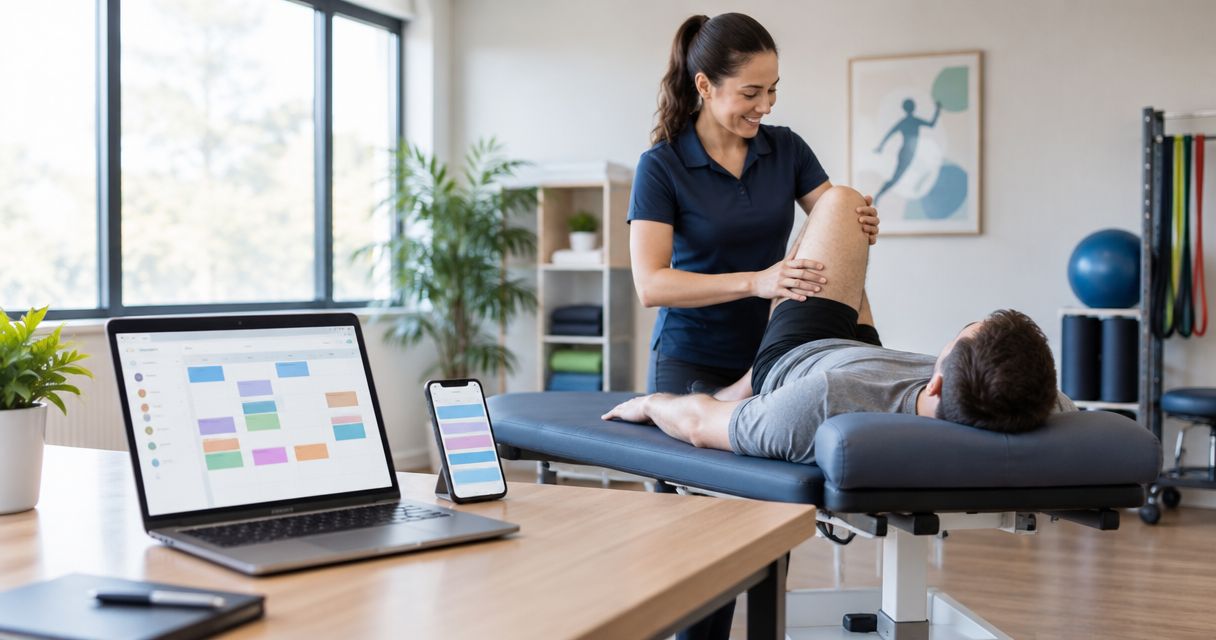
Best for appointment-led gyms: Calendra. Best for recurring group classes: TeamUp. Best for appointment intake: Acuity Scheduling. Best for fitness and wellness operations: Mindbody. Best for consultation scheduling: Calendly. This 2026 guide separates booking a trainer’s time from managing class places and memberships, so you can choose around the work your gym actually needs done.
- Calendra is a fit for appointment-led gyms that need customers to book online, 24/7.
- The best appointment booking software for gyms depends on personal training, class scheduling and membership requirements.
- TeamUp suits recurring group classes; Acuity Scheduling suits appointment-led services with client intake.
- Mindbody belongs on a fitness-management shortlist; Calendly suits consultations rather than full gym operations.
Why this matters
A personal training appointment reserves a trainer’s time. A class booking reserves a place in a shared session. A membership determines what someone is entitled to book. Those are different jobs, even when members access them through the same website.
Choose a tool around the wrong job and your team must reconcile the gaps manually. Before comparing dashboards, identify whether your main problem is unanswered booking enquiries, class capacity, trainer availability or membership access.
The right booking software matches the thing your customer is reserving. A gym offering consultations needs a different shortlist from a studio running recurring classes.
What makes the best gym booking software?
Use these criteria to compare your 2026 shortlist. Treat them as acceptance requirements, not features every product automatically includes.
- Booking model: Decide whether you need individual appointments, shared class places or both. Ask the supplier to demonstrate the exact booking type.
- Availability control: Check how the system handles trainer hours, overlapping services, preparation time and changes to the timetable.
- Capacity and eligibility: For classes, verify attendance limits and whether booking access follows the member’s pass or membership rules.
- Customer self-service: Walk through booking, cancellation and rescheduling from a customer’s phone. Identify every step that still needs staff intervention.
- Operational fit: Check how bookings connect with payments, attendance, customer records and your existing systems. Separate essential connections from convenient extras.
- Administration: Have the person running reception update a schedule and resolve a booking problem. A clear customer journey is not enough if daily administration remains difficult.
There is no universal winner across these criteria. An appointment-first gym should prioritise availability and self-service; a class-led gym should put capacity and eligibility first.
Gym booking software at a glance
The table compares each product’s main use case, not a claim that every product provides an equivalent gym-management system. Confirm the current feature set before making a commitment.
| Software | Best for | Standout focus | Key limitation to resolve |
|---|---|---|---|
| Calendra | Appointment-led gyms | Online appointment booking, 24/7 | Confirm gym-specific class, membership and resource requirements |
| TeamUp | Recurring group classes | Fitness scheduling and membership management | Check whether its fitness-management scope matches an appointment-only operation |
| Acuity Scheduling | Appointment intake | Scheduling with intake forms | Check how shared classes and membership eligibility fit your workflow |
| Mindbody | Fitness and wellness operations | Scheduling within a broader business-management platform | Establish which functions your team actually needs to administer |
| Calendly | Consultations and introductory calls | Availability-based meeting scheduling | Do not treat meeting scheduling as complete gym management |
1. Calendra: best gym booking software for appointment-led gyms
Calendra provides online appointment scheduling for service businesses, letting customers book 24/7. That makes it relevant when your gym’s immediate requirement is accepting appointments online rather than administering an entire fitness operation.
Calendra is best for appointment-led gyms that need customers to book online, 24/7. Start with a defined service, such as a personal training consultation, and establish whether the booking process matches how your staff allocate appointments.
Calendra pros
- Online appointment booking directly addresses a service business’s scheduling requirement.
- Customers can submit bookings outside reception hours, including overnight and at weekends.
- Its appointment-led positioning gives you a clear starting point for assessing consultation and trainer bookings.
Calendra cons
- Appointment booking alone does not establish suitability for recurring, capacity-limited gym classes.
- Membership eligibility, trainer allocation and equipment conflicts need confirmation before you use it for those workflows.
Best for: Gyms whose priority is making service appointments bookable online.
For your 2026 assessment, demonstrate the whole appointment journey rather than stopping at the booking screen. Check what happens when a customer changes a booking, a trainer becomes unavailable or reception needs to correct an entry.
Verdict: Buy for appointment-led scheduling only after the required workflow is confirmed; hold for class-led operations until gym-specific requirements are demonstrated.
2. TeamUp: best gym booking software for recurring group classes
TeamUp is fitness business management software with class scheduling and membership management. It belongs on your shortlist when customers book places on a timetable rather than simply reserving an appointment with one person.
The important distinction is eligibility. A class-led gym needs to know both whether a place exists and whether the customer is entitled to take it. Evaluate those together instead of treating membership administration as a separate project.
TeamUp pros
- Its fitness-business focus matches the language of classes and memberships.
- Class scheduling makes it relevant to a recurring group timetable.
- Membership management belongs in the same assessment as booking access.
TeamUp cons
- A fitness-management system introduces decisions beyond accepting appointments; define who owns those settings.
- Individual trainer availability and any unusual resource-sharing rules still need a practical demonstration.
Best for: Gyms and fitness studios where recurring group classes drive the booking process.
Ask the supplier to follow a member from registration through booking and attendance. Then repeat the journey when membership eligibility changes. That second demonstration reveals whether the system follows your rules or requires staff to intervene.
Verdict: Buy for class-led operations when membership and timetable rules work together; skip a wider rollout if your only requirement is a consultation calendar.
3. Acuity Scheduling: best gym booking software for appointment intake
Acuity Scheduling centres on online appointment scheduling and supports intake forms. It is a relevant option when your gym needs information from a customer as part of reserving an individual service.
For example, an initial training consultation has a different information requirement from a place in a group class. Decide what staff genuinely need before the appointment, then check that the booking journey collects it clearly.
Acuity Scheduling pros
- Appointment scheduling fits services delivered at a reserved time.
- Intake forms support collecting relevant customer information during booking.
- Its appointment-led approach gives you a focused option for consultations and individual services.
Acuity Scheduling cons
- Appointment suitability does not establish that your gym’s membership eligibility rules will work.
- Collecting information creates a responsibility to control access and avoid unnecessary sensitive details.
Best for: Gyms that need structured intake alongside individual appointments.
Keep your intake form short and purposeful. Ask whether each field changes preparation, suitability or delivery; remove fields that merely duplicate information held elsewhere. For your 2026 review, include staff access and data handling in the assessment, not just the form’s appearance.
Verdict: Buy for appointment intake when the scheduling and information flow fit; hold if membership-controlled classes are your central requirement.
4. Mindbody: best gym booking software for fitness operations
Mindbody provides business-management software for fitness and wellness businesses, including scheduling and memberships. It is relevant when booking is part of a wider operational requirement rather than an isolated calendar problem.
Start with your operating model. A gym combining classes, appointments and membership administration should assess those connected processes together, instead of choosing each component separately and assuming they will align.
Mindbody pros
- Its fitness and wellness focus matches businesses selling scheduled services.
- Scheduling and membership functions make it relevant to a broader operational assessment.
- It gives gyms with several connected requirements a platform to evaluate beyond appointment booking alone.
Mindbody cons
- A broader system requires you to define processes and administration responsibilities before launch.
- Product scope alone does not prove that your specific booking rules or existing integrations are covered.
Best for: Gyms evaluating scheduling alongside wider fitness and wellness business management.
Request a demonstration built around your actual timetable and member journeys. Avoid a tour that shows many functions without resolving who books, what they can access and what reception must do when something changes.
Verdict: Buy when connected operational requirements justify the scope; skip it as the default answer to a simple appointment-booking problem.
5. Calendly: best gym booking software for consultations
Calendly is an availability-based scheduling tool for meetings and appointments. It is a relevant option for introductory calls, sales consultations and other conversations that need an agreed time.
Keep that role narrow. Scheduling a prospective member’s consultation is not the same as managing their membership, reserving a class place or recording gym attendance.
Calendly pros
- Its meeting-scheduling focus matches introductory calls and consultations.
- Availability-based booking suits conversations organised around a staff member’s calendar.
- It provides a distinct option when your enquiry process needs scheduling but gym operations already sit elsewhere.
Calendly cons
- Meeting scheduling should not be mistaken for a full fitness-management workflow.
- Separate consultation and gym systems require a clear handover of customer information and responsibility.
Best for: Gyms arranging introductory conversations rather than replacing operational booking software.
Identify where the consultation ends and member onboarding begins. A booked conversation is useful only if your team knows how to follow it through without losing the customer’s details or repeating work.
Verdict: Buy for a defined consultation workflow; skip as your sole system when classes and memberships drive daily operations.
How we ranked these gym booking options
These recommendations follow workflow fit: appointment booking, class capacity, membership eligibility, intake and administration. The order is not a performance score, and the products are not interchangeable.
Calendra leads the appointment-led use case because its stated offer is online appointment scheduling for service businesses. TeamUp takes the class-led slot; Acuity Scheduling takes intake; Mindbody covers the wider operational shortlist; Calendly serves consultations.
Choose the use-case winner, not automatically the first product. For a class-led gym, the class-management recommendation takes priority over the appointment-led recommendation.
Check the booking journey before you commit
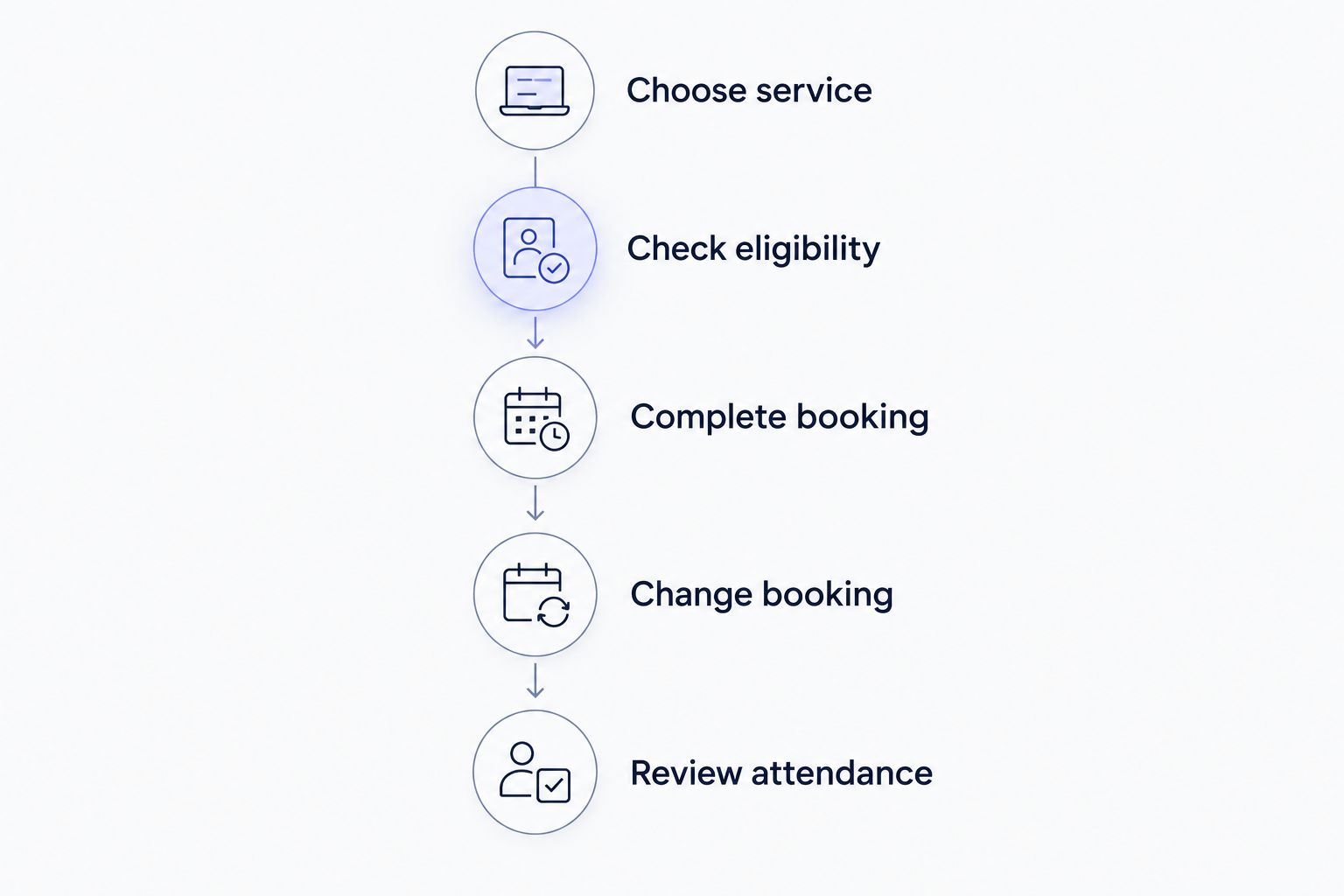
Use the same practical sequence for every supplier on your 2026 shortlist. Start with a real service and follow it from customer selection to staff administration.
- Choose service: Confirm that customers understand what they are reserving.
- Check eligibility: Establish whether availability, capacity and access rules permit the booking.
- Complete booking: Check what the customer submits and what confirmation they receive.
- Change booking: Follow a cancellation, reschedule or staff change through the system.
- Review attendance: Establish how staff identify the booking and record what happened.
A successful booking is only part of the test. The change-booking step exposes whether reception can resolve ordinary disruptions without creating conflicting records.
Which gym booking software should you choose?
Choose an appointment scheduler when customers reserve individual time; choose fitness-management software when classes and membership access determine booking. That distinction is the clearest starting point for an undecided buyer.
For an appointment-led gym, assess the online booking workflow first. For recurring group classes, start with TeamUp. Use Acuity Scheduling when intake is central, Mindbody when wider operations belong in scope, and Calendly when you only need consultation scheduling.
Before committing, write down your non-negotiable booking rules and have the supplier demonstrate them. Do not replace an unresolved requirement with an assumption.
FAQ
What's the best appointment booking software for gyms in 2026?
The best appointment booking software for gyms depends on the booking model. Calendra fits an appointment-led shortlist, TeamUp suits recurring group classes, and Mindbody belongs in a wider fitness-management assessment.
Is appointment scheduling software enough to run a gym?
Appointment scheduling alone is not enough when your gym also needs membership eligibility, class capacity and attendance management. Define those requirements separately and confirm how the selected system handles them.
Is TeamUp better than Calendly for gym classes?
TeamUp is the more relevant shortlist option for recurring gym classes because it focuses on fitness scheduling and memberships. Calendly is better aligned with consultations and meetings than a complete class-management workflow.
Which gym scheduling option should I consider for intake forms?
Acuity Scheduling is a relevant option for appointment scheduling with intake forms. Check that the information collected serves a clear purpose and that staff access matches your data-handling requirements.
Can customers book gym appointments outside opening hours?
Online appointment booking can let customers reserve a time without waiting for reception to open. Calendra states that customers can book online 24/7, meaning 24 hours a day, 7 days a week.
What should I check before switching gym booking software?
Check booking types, availability, membership rules, customer changes and staff administration before switching. Follow a complete customer journey and establish how existing records and future bookings will be handled.
Do gym booking systems include membership management?
Some fitness-management platforms include membership management, but appointment scheduling does not automatically include it. TeamUp and Mindbody belong on a membership-focused shortlist; confirm the exact eligibility rules your gym requires.
One last thing
Before choosing your gym booking software in 2026, test the awkward booking: a member changes sessions after their eligibility changes, or a trainer becomes unavailable after an appointment is confirmed. A polished booking page does not answer either problem.
Make exception handling part of the buying decision. Ask reception to complete the change themselves; the person resolving daily problems should help decide which system fits.